Written while waiting to board my flight to San Francisco—reflections on courage, gradual exposure, and the immigrant experience.
The Spider Therapist’s Mistake
Imagine you have a spider phobia. You finally build up the courage to visit a therapist. But instead of easing you in, the therapist walks into the room holding a massive tarantula and says calmly,
“See? There’s nothing to be afraid of.”
You’d probably never come back.
You might even feel worse than before.
Any decent therapist knows that’s not how you treat fear. The proven method is gradual exposure. First, you talk about your fear while looking at a framed picture of a spider. On your next visit, you might observe a tiny spider inside a cage. Then, over time—only after building trust and tolerance—you might be able to sit calmly while the therapist pets their tarantula across the room.
That’s how bravery is built: not all at once, but step by step, with safety and support.
The Immigrant Paradox
Now here’s the question that struck me while sitting in an airport gate:
Do first-generation immigrants get this kind of gradual exposure to their new lives?
Do we get any controlled space to observe, adjust, and process?
Any system that helps us warm up to the complexity of a new culture, language, and way of life?
Probably not.
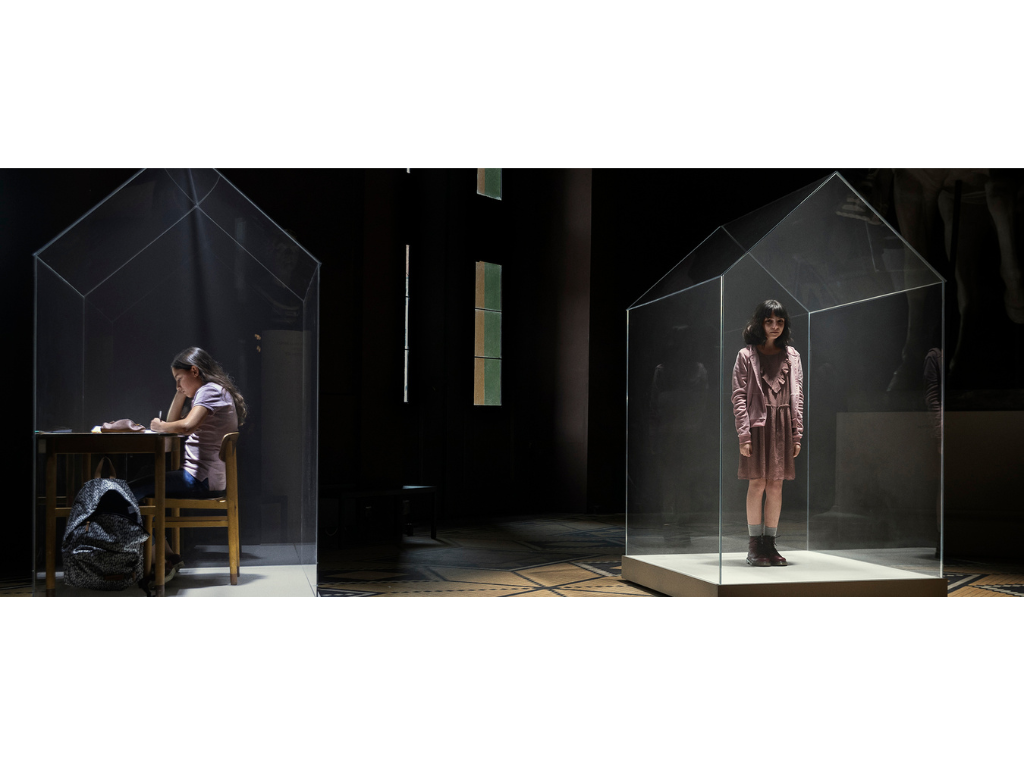
Most of us are thrown straight into full immersion. From day one, we’re expected to survive, adapt, perform—and often, compete. There’s no warm-up phase. No time to slowly adjust our nervous system to the unknown.
It’s like the spider therapist skipping every step and throwing the tarantula into our lap.
The Sink-or-Swim Reality
I’ve been there.
I know what it’s like to land in a new country and feel like everything—your identity, your instincts, your confidence—is being tested all at once.
Unlike phobia therapy, you can’t just leave the room when it gets overwhelming.
You can’t fly home every time things feel too foreign.
You figure it out—day by day, mistake by mistake, tiny win by tiny win.
There’s no framed picture of “American culture” to study. You live inside it.
And often, it moves faster than you can process.
What I’ve Learned Along the Way
Over the years, I’ve come to a quiet but solid truth:
I can’t give you what you want—but I can help you find how to get there.
If you still want to be where you’ve dreamed of being, I can show you the map I drew from my own journey.
This isn’t about shortcuts. It’s about strategy, pacing, and learning how to build courage while using it in real time.
The Kind of Courage No One Talks About
There’s a unique kind of bravery that immigrants develop.
It’s not the courage of controlled environments and safe trial runs.
It’s the courage of living in uncertainty, constantly.
It’s getting up and trying again—without ever knowing if you’re “doing it right.”
It’s showing up even when the rules keep shifting.
It’s learning how to grow while surviving.
And that kind of courage, though exhausting, is also deeply transformative.
Building Systems That Don’t Exist (Yet)
Maybe there’s something we can learn from the world of therapy:
What if we created gradual exposure systems for immigrants?
Mentorship circles. Cultural orientation with emotional pacing. Safe spaces for trial and error.
We may not have those structures yet—but until then, we rely on each other.
We share stories. We offer context. We remind one another:
You’re not weak for feeling overwhelmed. You’re simply human.
An Open Door
If you’re in the middle of a big transition—immigration, career change, identity shift—and you feel like you’re staring at a tarantula when you’re only ready for a photo…
I understand.
Doubt doesn’t mean you’re failing.
It means you’re in the middle of something real.
And if you ever wonder whether you can keep going, feel free to reach out.
I won’t promise easy.
But I’ll share what I’ve learned—what worked, what didn’t, and why I still believe it’s worth continuing.
DM me if you ever doubt whether you can.
—
Somewhere between departure and arrival—like most of us immigrants, in one way or another.
— TK